
Check out some of my projects
Biomedical Communicator | Translating clinical and biomedical research across surgical and medical disciplines
Location
University Hospital Limerick, Limerick
University of Limerick
Biomedical Communicator | Translating clinical and biomedical research across surgical and medical disciplines
University Hospital Limerick, Limerick
University of Limerick
Transabdominal pre peritoneal inguinal hernia (TAPP) repair requires the surgeon to have good manual skills in laparoscopic surgery, as well as an understanding of the laparoscopic features and anatomy of groin anatomy. A realistic simulator for TAPP inguinal hernia repair would enhance surgeons' training experience before they enter the operating theatre.
The aim of this project will be to create a novel, realistic, inexpensive, and easily reproducible simulator for teaching and practice of laparoscopic TAPP inguinal hernia repair.
The simulator would also act as an anatomical teaching aid for the pelvic region.
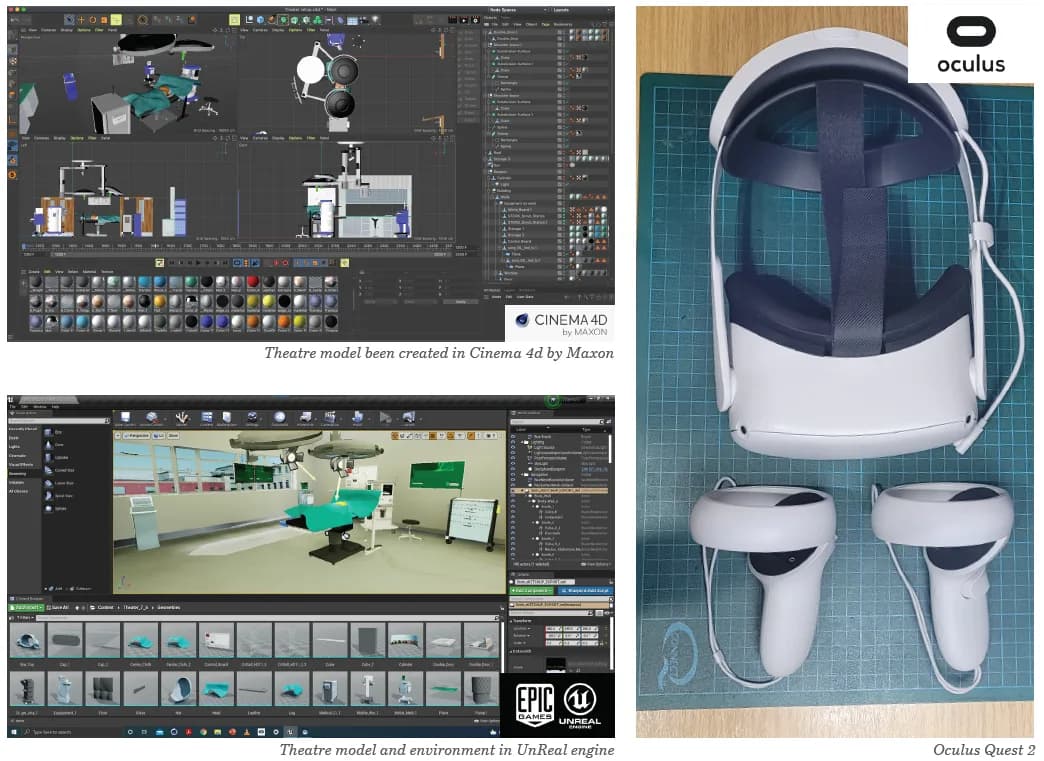
Visiting a surgical theatre can be intimidating for medical students. The dynamics of the theatre makes it difficult to understand what all the different equipment does and how it does it. This type of learning can be done in a VR space without all the distractions of a live theatre.
Generating a 3d model of theatre in Cinema 4d and Sketchup and exporting it into the UnReal Engine (by Epic Games) the model can be explored in real world scale.
Medical equipment and instruments use can be explained in detail giving the student a basic understanding of theatre before they ever enter a live surgery thus when they finally enter a live theatre they can concentrate more on the procedure taking place.
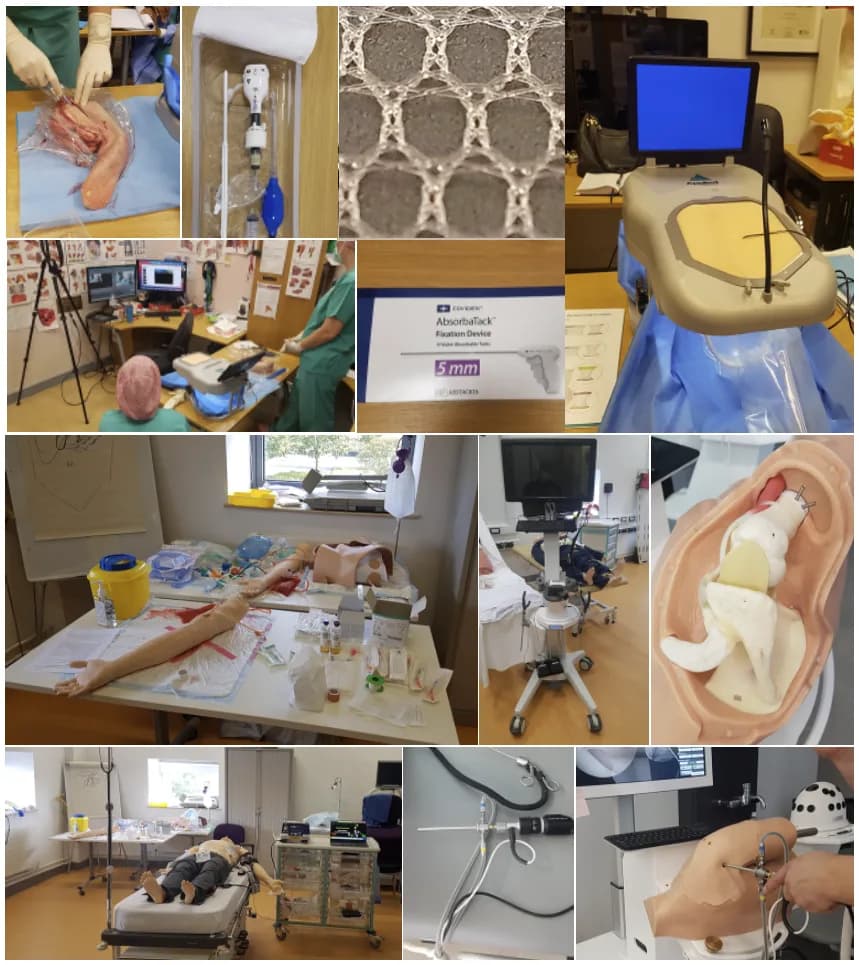
This final concept has removed unnecessary anatomy to reduce manufacture (3D print) time. It provides an anatomically accurate simulation of laparoscopic hernia repair. The simulator can be used as an educational tool. The cage will give options for port placement to suit all users and preferences. A simple swap in/out module system will be used, with cheap and easily repairable or replaceable modules. It is suitable for testing out new equipment or meshes. Designed with the abdomen pre-insufflated (no expensive and dangerous pressurised gas required). Easy removal of the cage for teaching use by making the anatomy clearly visible. A realistic skin overlay can be used when not being used for teaching. Quick swap in/out modules allow users to spend more time developing their surgical skills. The module-based approach allows the user to start the learning process with easy repair procedures and graduate to more difficult hernia repair procedures. During initial assembly of the module, specific anatomical variants can be incorporated. This gives course creators the ability to teach specific repair techniques and how to avoid potential difficulties. The peritoneum and hernia sac can be easily and cheaply replaced between cases; it should take less than 5 minutes to replace, plus 15 minutes drying time.
From the video below we can see how the model compares to the real procedure.
From initial view to final inspection the model look and reacts similar to the human anatomy. The peritoneum behaves comparable to each other allowing the user to practice techniques such as placing tension in the peritoneum while dissecting.
These techniques will translate well into the operating theatre.
Instrument use can also be safely practiced and mesh insertion and placement along with pocket closure. The use of the tacker is also similar in both with the requirement of external pressure applied externally to assist in the tack in embedding correctly.